In the recent past we have observed how Victoria, South Australia, Tasmania and New South Wales all have used amalgamations as a means to ensure cost savings and increase the financial viability of local councils. The Deloitte Access Economics report, released last month, found that council mergers could bring efficiency gains of 10 to 20 per cent and that savings could reach a 35 per cent, or $100 million a year.
Lately, there has been talk about structural changes within local councils in NSW. Generally, council leaders have been strongly opposed to talk of mergers, with many representatives tending to fear erosion of local representation.
Examples from around NSW illustrate how councils have reacted to prospects of amalgamation. Recently, there have been speculations concerning a merger between Lake Macquarie and Newcastle Councils, which would create NSW’s largest council. However, on the basis of a research report, Lake Macquarie Council announced that it sees no benefit in merging with Newcastle Council. The council cited the report in claiming that amalgamations rarely lead to successful outcomes where cost savings and efficiency gains are achieved.
Lake Macquarie Council was later backed by Newcastle Council, stating that a merger is unlikely to happen anytime soon. Under budgetary pressure, though, both councils have admitted they must examine sharing more resources with other councils.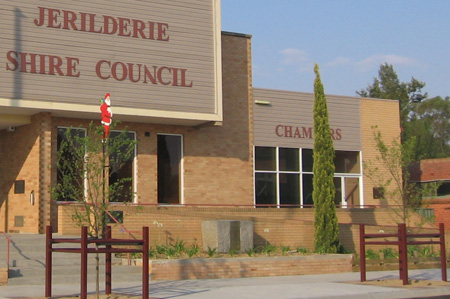
The talk of council amalgamations have not been welcomed in the Riverina either, with no mayor or general manager keen on the idea. However, Wagga mayor Wayne Geale conceded that in some way or another, councils in the region, including Wagga, Coolamon and Junee, would be eventually forced into merging or sharing resources in the next five years.
Last month, 350 representatives from the 152 councils across the state gathered in Dubbo to discuss the future of the local government sector. The Destination 2036 conference was held in order to address the long-term financial vulnerability of councils. Aiming to produce an action plan for how to run the local government sector, topics discussed at the conference indicated that systemic changes may have to be made to the structure of local government as we know it.
“It is clear that if we do not seek to improve and modernise local government, then there will be communities that are ‘haves’ and ‘have-nots’, in terms of the number of the number and quality of services delivered to ratepayers,” Local Government Minister Don Page said.
In spite of Mr Page's assurances that there will be no state-imposed amalgamations, some local council representatives from both rural and metropolitan areas were sceptical of his statement, and expressed belief that amalgamations are to be an inevitable constituent of the state government agenda.
When surveyed about the prospects of further rationalisation initiatives (rationalising services in order to better share resources between different councils), 42 per cent of NSW councils agreed, while 58 per cent voted against, fearing that the initiative is a step towards more than just resource-sharing. President of the Local Government Association, Councillor Keith Rhoades, highlighted the association’s resistance to forced amalgamations.
“The Associations have always been, and will continue to be, opposed to forced amalgamations of local councils. We will continue to stand strong on this issue, however, we’ve been encouraging councils to look at ways they can become more efficient and build the local government of the future that their communities want and deserve,” Cr Rhoades said. He did, however, also underline that strategic alliances and informal partnerships between councils can prove a powerful method for achieving goals, a viewpoint also advocated by Mr Page.
In the UK, the idea of alliances has been welcomed by councils. Recently, Breckland District Council and South Holland District Council have agreed to form a joint management team . “Both of our councils have made a commitment to continue to deliver high quality customer focused frontline services whilst at the same time actively working to drive out considerable cost savings,” said Gary Porter, leader of South Holland District Council. The arrangement is particularly notable given that the two District Councils do not border each other.
With the strong opposition among local NSW councils and the Associations it is still unclear if actual mergers will go through within the next few years or if we will instead see a move towards strategic alliances as seen in the UK.
Is your marketing team keeping track of changes in local government all across the country? Let us help you stay ahead of the game with our unique database of 6000 decision-makers in every council across Australia. Call us now on 02 9516 4703 or email

